Custom models & retrieval
Retrieval-augmented generation (RAG) gives a model relevant source material to use when it answers. We design that connection around your documents, systems, and workflows.
AI Strategy & Consulting
We help define the task, identify the data it needs, and plan custom implementation with a way to measure the result. Our work covers strategy through implementation.
Start with the task a person needs to complete. Then decide where AI belongs in the workflow.Our starting point
The starting question
An AI project needs a defined task. Who will use it, what information can it access, and what should happen after a request? Those questions give the design a scope.
A model that answers questions may still be disconnected from the work. We examine the documents, systems, and approval steps that a request needs before choosing how to implement it.
Our work covers AI strategy and implementation, including custom models and retrieval of business information. Read about what we do or explore our research.
Our approach
We design models and retrieval around your data and workflows. Retrieval means looking up relevant information before a model produces its response.
Retrieval-augmented generation (RAG) gives a model relevant source material to use when it answers. We design that connection around your documents, systems, and workflows.
Forge is Intenteon’s AI platform; HomeBedrock and SetlistRadar are being built on it.
Our privacy policy, linked at the foot of this page, sets out what we collect, how we use it and who we share it with.
Our founder previously built DNS infrastructure that handled roughly 8–10% of the world’s authoritative DNS traffic. Authoritative DNS servers give the published answers that direct requests to a domain’s services. That experience informs our attention to reliability.
What we deliver
Review your data, existing systems, and proposed uses for AI. The assessment sets priorities and estimates potential return on investment, meaning the expected benefit compared with cost. Estimates are planning inputs, not promised returns.
We design custom models and retrieval-augmented generation to supply relevant source material from your data before a response is generated.
Redesign your product around intent. We help product teams replace menu-driven screens with requests in plain language, and decide what the system does on its own and when a person reviews it.
Guidance for federal, state, and local agencies on Super Intelligence (SI) and AI adoption within procurement and security requirements. We design with FedRAMP, the US federal cloud-security program, and FISMA, the federal information-security law, in view. Design alignment is not certification.
How we measure
TIER, the Token Impact & Efficiency Ratio, is our open-source engineering measure. It compares work merged into a codebase with each $1,000 of recorded AI usage, valued at published list prices. We built it to measure our own engineering and can set it up for other teams. It describes that recorded activity; it does not show that AI caused the result.
How it works
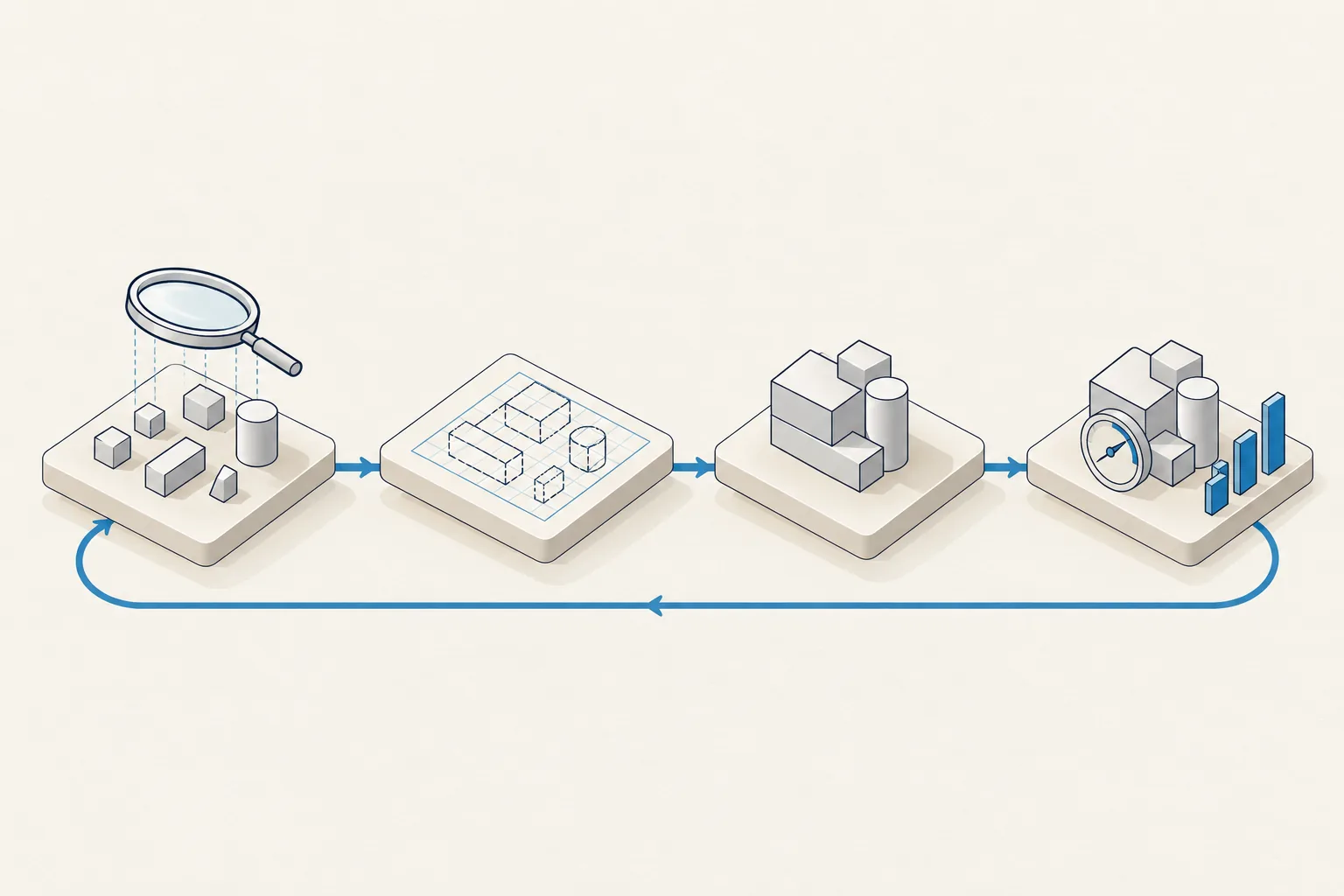
Review the proposed tasks, available data, and existing systems.
Design the model, the source-information lookup, and the connections to existing systems.
Build and deploy intent-driven products within the agreed scope.
Compare the result with the agreed measures, including cost and performance, before deciding what to expand.
Questions
We start with a task, then design custom models and retrieval around the data and systems it needs. We agree how to measure the result as part of the scope.
Yes. We provide Super Intelligence (SI) and AI advisory for federal, state, and local agencies on procurement, security requirements, and data handling. FedRAMP and FISMA are design considerations; this is not a claim of certification or authorization.
Our consulting includes implementation. Our founder previously built DNS infrastructure that handled roughly 8–10% of the world’s authoritative DNS traffic: the published domain answers used to reach internet services. That experience informs our approach to reliability.
For our design work, data sovereignty means controlling where data is stored and processed and who can access it. We discuss those boundaries before choosing how a system will run.
Bring a workflow and the information it depends on. We can discuss scope, data boundaries, and a way to measure the result. Your Intent. Delivered.